Home Prices
Home Prices Are Still Rising—but Buying Power Is More Complicated
National home prices remain higher than a year ago, but the effect on your budget depends on rates, cash, taxes, and the local market.
TL;DR
- • FHFA reported U.S. house prices up 2.4% year over year in August 2026.
- • NAR reported a $417,500 median existing-home price in September, up 1.3% from a year earlier.
- • Buying power depends on the combination of price, rate, taxes, insurance, and available cash.
Home prices are still rising nationally
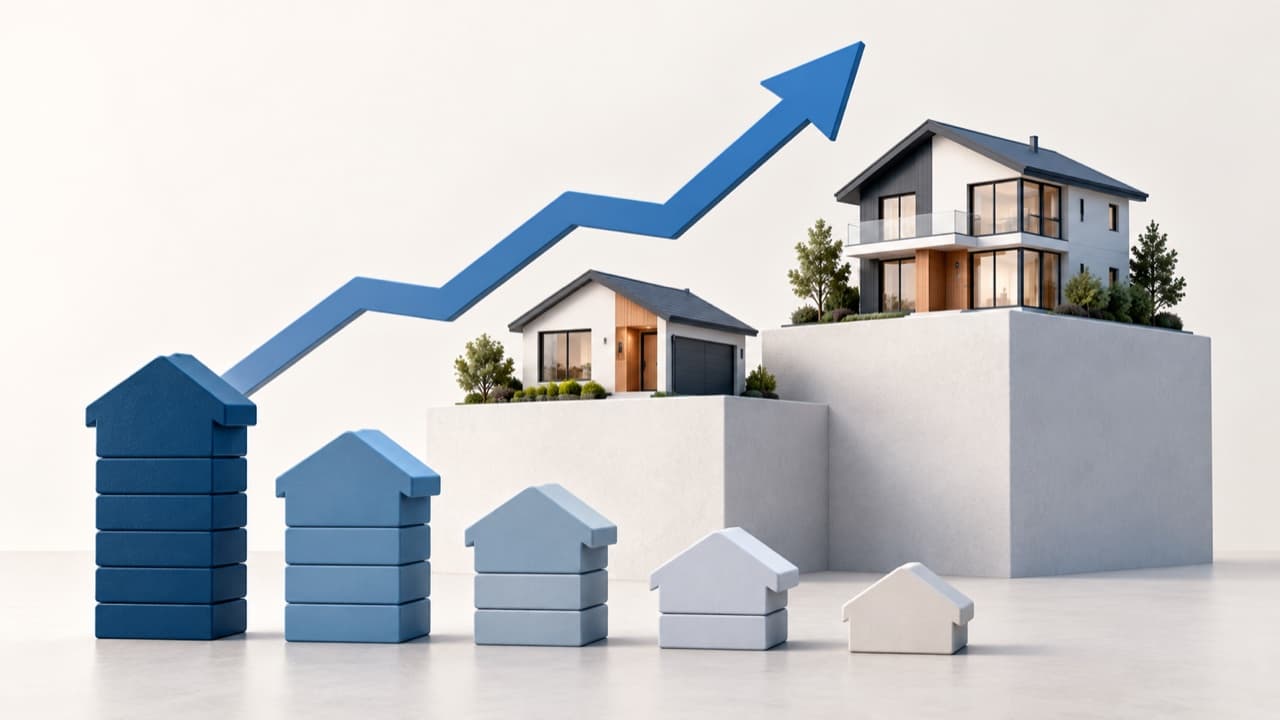
Two recent national measures point in the same broad direction. FHFA's repeat-sales index increased 2.4% from August 2025 to August 2026, while the National Association of Realtors reported that the median existing-home sales price reached $417,500 in September, 1.3% above a year earlier.
Those national numbers are useful context, not a price forecast for a specific home. FHFA reported wide regional differences, and local results can vary by neighborhood, property condition, school district, and price tier.
Why a higher price can hit twice
If a $400,000 home rises 2.4% to $409,600, a 10% down payment increases by $960 and the loan balance rises by $8,640. The buyer may also face higher property taxes, insurance, and closing costs because several expenses are tied to the home's price or value.
A lower mortgage rate can offset part of that increase, but not always all of it. That is why buyers should model price and rate together rather than assuming one variable will cancel the other.
Your local market matters more than the headline
A national median is not the price of a typical home in every city. NAR's September regional medians ranged from $329,600 in the Midwest to $613,600 in the West. Even within a metro area, inventory and competition can be very different from one ZIP code to the next.
- Review recent comparable sales, not only active asking prices.
- Compare property-tax bills for specific homes.
- Price insurance before making an offer when possible.
- Leave room for inspection findings and immediate repairs.
AffordSimple calculator
Find a comfortable home-price range
Estimate a Comfortable, Balanced, and Stretch budget using your income, debts, cash, and ongoing costs.
Find my home budget →How to protect your buying power
Set a monthly ownership limit before setting a maximum purchase price. Then test several combinations: a lower-priced home at today's quote, a slightly higher price with seller credits, and a conservative case with higher taxes or insurance. The scenario that preserves savings and monthly flexibility is usually more useful than the largest approval amount.
Bottom line
Prices are still rising nationally, but at a moderate and uneven pace. Buyers should use current local data and a complete monthly-cost estimate instead of assuming that a national trend determines what they can afford.
Sources and methodology
Market figures are sourced from the publications below. Examples are illustrative and are not loan quotes or financial advice.