
Housing Policy
The Fed Held Rates Steady. Why Your Mortgage Quote Can Still Move
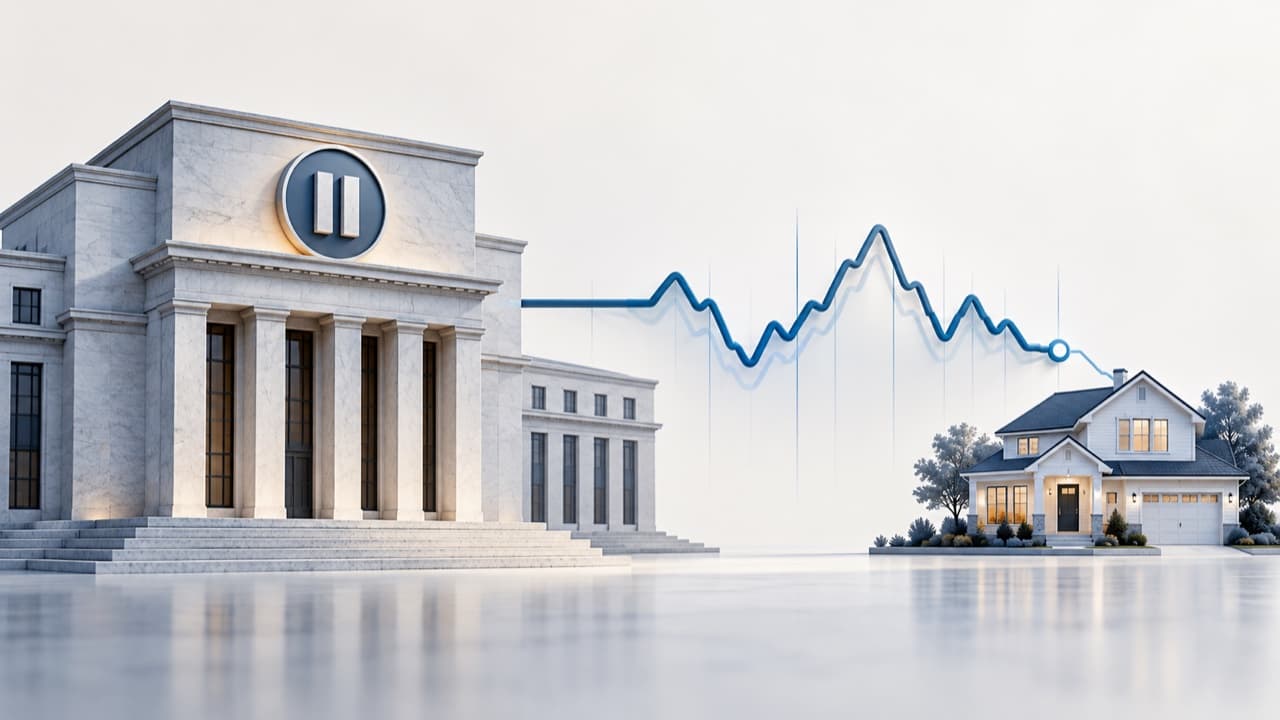
The Fed held its target range at 3.75% to 4.00%, but mortgage rates still respond to a much wider market.
TL;DR
- • The Federal Reserve held the federal funds target at 3.75% to 4.00% on October 28, 2026.
- • Mortgage rates can still rise or fall because they are tied to longer-term market conditions.
- • Buyers should follow actual lender quotes, not assume a Fed hold freezes mortgage pricing.
The Fed held its policy rate steady
On October 28, the Federal Open Market Committee maintained its target range for the federal funds rate at 3.75% to 4.00%. The statement said economic activity was expanding at a strong pace and inflation remained elevated. The decision passed 10 to 2, with two members preferring a quarter-point increase.
That is important economic news, but it is not a direct setting for 30-year mortgage rates.
Why mortgage rates can move after a Fed hold
Mortgage pricing is influenced by Treasury yields, mortgage-backed securities, inflation expectations, economic growth, market volatility, and lender margins. Investors also react to the language in the Fed statement and press conference, not only the announced policy rate.
If the Fed does exactly what markets expected, mortgage rates may barely react. If its outlook sounds more concerned about inflation or growth than expected, longer-term yields can move even though the policy rate did not.
What buyers are seeing now
Freddie Mac reported the average 30-year fixed rate at 7.24% on October 29, down from 7.32% one week earlier. That move illustrates the separation: the Fed held steady, while mortgage rates still changed as the broader market repriced.
A national average is not a personal quote. Credit, points, loan type, down payment, occupancy, property, and lender all affect the actual offer.
AffordSimple calculator
Turn today's quote into a full payment
Enter the rate, price, down payment, taxes, insurance, and monthly costs to see the complete estimate.
Calculate my payment →What buyers should do next
Use the Fed meeting as context, not a timing signal. Ask lenders for comparable quotes, understand lock terms, and calculate the payment at today's rate plus a conservative higher-rate scenario.
- Do not assume a future refinance will rescue an unaffordable payment.
- Compare points by calculating the break-even period.
- Keep the purchase price within the full monthly budget.
- Review quotes again when the property and closing timeline are known.
Bottom line
A Fed hold does not lock mortgage rates in place. The useful number is the real lender quote attached to your loan scenario, measured against a budget that includes every major ownership cost.
Sources and methodology
Market figures are sourced from the publications below. Examples are illustrative and are not loan quotes or financial advice.